

send subdomain for the Return-Path address.
Domains that show
CNAME records for sending use your Return-Path subdomain
for one record and an r-prefixed sibling for the other. With a Return-Path
of outbound, you’ll be shown records for both outbound.example.com and
routbound.example.com, and both need to be added for the domain to fully
verify.custom_return_path parameter when creating a domain via the API or with the domains create CLI command.
The Return-Path is set when the domain is created and cannot be changed
afterwards, so
custom_return_path is not accepted by the Update
Domain endpoint. To use a different
Return-Path subdomain, delete the domain and add it again with the new value.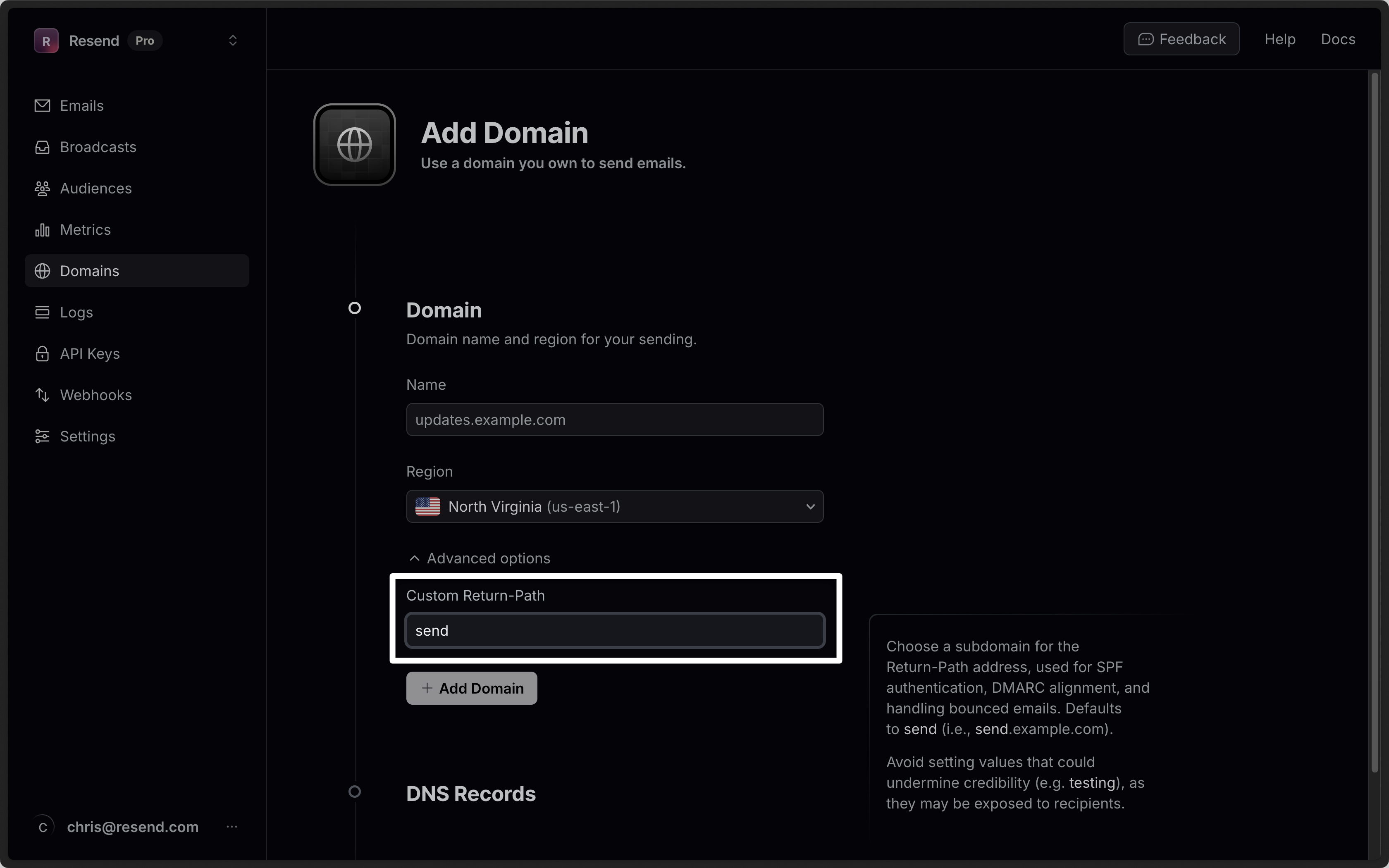
- Must be 63 characters or less.
- Must start with a letter, and end with a letter or number.
- Must contain only letters, numbers, and hyphens.
testing), as they may be exposed to recipients in some email clients.